Transparency: This post contains affiliate links. If you buy through them, I may earn a commission at no extra cost to you. Learn more.
Introduction
Most smart homes today depend on the cloud. That means your lights, locks, and cameras often send data back to big companies. This can be convenient, but it also creates risks.
What if you want the benefits of smart living without giving away control? The answer is an offline smart home. By keeping automation local, you protect your privacy, improve speed, and stay independent. Let’s see how you can build one in 2025.
Why Privacy Matters in a Smart Home
When devices rely on the cloud, your home data is never fully private. Voice recordings, camera footage, or even your daily routines can end up stored online. In fact, there have been cases where hackers accessed smart cameras because they were cloud-linked.
If privacy actually matters to you, this is a strong reason to think differently. An offline setup makes sure your data stays at home, where it belongs.
(“Smart homes often collect and process data in ways that lack transparency and user control, which is exactly why a privacy-first, offline approach makes sense.” Read the analysis.

What an Offline Smart Home Really Means
An offline smart home does not mean you cut the internet completely. It means your devices work locally, even if the internet goes down.
Automation rules run on a local hub. Lights, locks, and sensors talk directly to it. You keep control without depending on remote servers.
Yes, the setup takes a bit more effort. But once it works, you gain speed, stability, and real privacy.
The Core of Privacy-First Smart Homes: Local Hubs
“Extensible hubs (like Home Assistant, Homey, or SmartThings) boost interoperability, but every add-on can widen the attack surface—so treat integrations like code you’re bringing into your home.” See the MDPI review.
At the center of every offline system is a hub. This is the brain that connects all devices and runs your rules.
- Home Assistant Yellow → open-source, powerful, and flexible. Perfect for tech lovers.
- Hubitat Elevation → easier to set up, focused on local privacy.
- Athom Homey Pro → sleek design and broad support for Zigbee, Z-Wave, Matter.
👉 These hubs don’t need the cloud to work. You keep the control.
(temporary no link)
Connect to “Smart Home Devices 2025

Devices Which Work Without the Cloud
Not all devices are cloud-free, but many are if you choose wisely.
- Shelly plugs and relays → strong choice for lights and appliances. They support local control.
- Aqara Zigbee sensors → motion, door, and temperature sensors that pair well with hubs.
- Z-Wave Long Range devices → reliable and designed for local networks. Z-Wave networks have known routing and integrity weaknesses in certain implementations, which is why firmware updates and network segmentation still matter—even if your automations run locally. Technical study
- Philips Hue (with bridge) → still works locally when connected via its hub.
Each of these can be linked to your hub, giving you automation without sending data away.

Offline Voice Control – Yes, It’s Possible
You might think voice control always needs the cloud. Actually, that’s no longer true.
Voice assistants face well-documented security and privacy issues—from adversarial audio to data leakage—so on-device or offline voice control is safer when privacy actually matters. Survey overview
Projects like Rhasspy and Mycroft AI let you run voice recognition locally. Some hubs are also adding offline voice features. This way, your commands never leave your home.
It’s not as polished as Alexa or Google Assistant yet. But if privacy matters most, it’s the right direction.
Security Tips for an Offline Smart Home
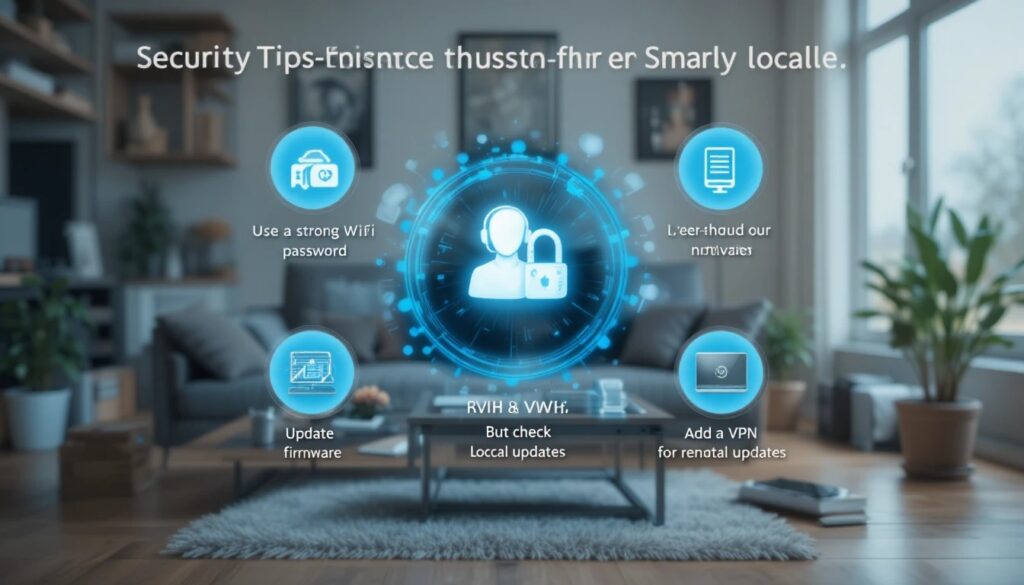
Even if devices stay local, security is still key.
- Use a strong Wi-Fi password.
- Keep IoT devices on a separate network if possible.
- Update firmware, but check for local updates.
- Add a VPN for remote access instead of opening ports.
Small steps like these can make your setup even harder to break.
When an Offline Smart Home Makes the Most Sense
This setup is perfect if you:
- care about privacy,
- live in an area with unstable internet, or
- simply want more control over your data.
Sometimes a hybrid system also works. For example, you can run lights and locks locally but still use a cloud service for streaming music. The choice is yours.
Conclusion – Building Privacy Into Your Home in 2025
Regulators are moving too: the UK ICO recently told smart-device makers to respect in-home privacy—or face action—which shows why local control is quickly becoming mainstream. News context
Smart homes don’t have to mean less privacy. By choosing the right hub and devices, you can enjoy automation that runs offline.
Start simple: pick a hub and add a few local devices. You’ll see the benefits quickly — faster response, safer data, and true independence.
If you’re ready to try, check out:
- Home Assistant Yellow (temporary no link)
- Hubitat Elevation (temporary no link)
- Shelly Smart Plug (temporary no link)
👉 With each step, you build a smarter home which puts privacy first.